Architecture is never neutral.
The built environment affects human health, cognition and behaviour far more than assumed. And far more than the industry is willing to admit.
How architecture reaches the body.
The bridge between the built environment and human health is the nervous system. Every space you enter activates it. Before you form an opinion, before you notice the ceiling height or the colour of the walls, your brain has already processed hundreds of sensory inputs. These inputs push your nervous system toward one of two states. One enables you. The other depletes you.
From spatial triggers to two states of being that affect mental and physical health
No daylight or glare. Hard, cold, artificial materials. Noise, no acoustic control. Thermal discomfort. No nature. Crowding. No place to rest, move or sit. No view. Poor air. Sharp angular forms. Repetitive high-contrast patterns. No proportion. No choice.
Fear. Anxiety. Stress. Reactivity. Overwhelm. Procrastination. Self-sabotage. Rumination. Negative thinking. Anger. Discomfort. Confusion.
Heart rate and blood pressure increase. Cardiovascular strain increases. Appetite decreases. Headaches and migraines increase. Neuronal function deteriorates. Immune function decreases.
Natural light and fresh air. Natural materials, textures and colours. Acoustic balance. Pleasant views. Human scale and proportion. Biomorphic forms. Places to rest, move and explore. Connection with nature. Thermal comfort. Spaces that support connection with oneself and others.
Calm. Pleasure. Creativity. Connection. Positive thinking. Engagement. Motivation. Lightness. Restfulness. Energy. Confidence. Clarity. Joy. Generosity.
Heart rate and blood pressure decrease. Cardiovascular function improves. Performance increases. Vitality increases. Immune function improves.
Research increasingly shows that the built environment can influence measurable physiological responses in the human body.
The Evidence is clear.
Daylight changes how we sleep, think and heal.
more sleep per night for office workers with windows vs. those without.
Boubekri et al., 2014. Journal of Clinical Sleep Medicinefewer sick hours for employees with views of trees and landscape.
Elzeyadi, 2011. Greenbuild Proceedings, USGBCshorter hospital stay for every 100 lux increase in daylight.
Joarder & Price, 2013The air inside determines how well we perform.
improvement in cognitive function through better ventilation and air quality.
Allen et al., 2016. Environmental Health PerspectivesEuropeans died from indoor air pollution in 2012 alone.
Healthy Buildings Barometer, BPIE/VELUX, 2024more scientific papers on neuroscience and the built environment published in the last year than the year before.
Cross-disciplinary research review, 2024Green spaces reduce crime, boost productivity, calm the mind.
fewer felonies in buildings surrounded by vegetation.
Kuo & Sullivan, 2001. Environment and Behaviorhigher productivity in offices with plants vs. minimalist offices.
Nieuwenhuis et al., 2014. Journal of Experimental PsychologyNature-rich environments measurably accelerate physiological stress recovery.
Stigsdotter, 2023Hospital design directly affects recovery and survival.
mortality rate in healthy, well-designed hospitals.
Healthy Buildings Barometer, BPIE/VELUX, 2024higher daylight intensity led to significantly less pain medication after surgery.
Walch et al., 2005. Psychosomatic MedicineHospital environments can re-trigger trauma or support recovery. Design choices in clinical settings are not aesthetic. They are clinical.
Trauma-Informed Design Society, 2024Children have no filter. They absorb everything a building gives them.
better learning performance through higher daylight in classrooms.
Healthy Buildings Barometer, 2024cognitive performance loss from noise distraction in work and learning environments.
Hongisto et al., 2005/2008Green play environments show significant positive effects on attention and impulse control in children with ADHD.
Kuo & Faber Taylor, 2004. American Journal of Public HealthHealthy buildings are not a cost. They are an investment.
global economic value could be generated by investing in employee health.
McKinsey Health Institute / World Economic Forum, via IWBI 2025annual economic losses in the U.S. from poor sleep linked to inadequate indoor environments.
IWBI, 2025 (Footnote 45)stock performance over 14 years for companies investing in employee health vs. 105% market average.
IWBI, 2025 (Footnote 39)The evidence exists.
The application is limited.
Over the last decade, research across neuroscience, health and the built environment has grown exponentially. The evidence is no longer missing. But clear pathways for application are.
Architects struggle to translate neuroscience into design decisions.
Developers lack tools to evaluate health impact beyond compliance.
Cities are planned without accounting for nervous system regulation.
Housing programs prioritize efficiency over human recovery and resilience.
Policies lag behind science, reinforcing outdated spatial standards.
The challenge is no longer whether space affects health. The challenge is how to turn this knowledge into the spaces where people actually live, learn, work and connect.
Not to decorate, but to confront.
The evidence is clear. But data alone does not change how we build. Concrete Human translates the science into feelings you recognize when you stand in front of the photographs. Documentary photography, poetry and real conversations. Not to illustrate research, but to make it impossible to look away.
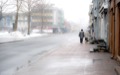


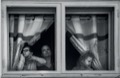








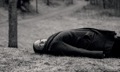









"Buildings, the places where each of us spends roughly 90% of our lives, must be at the heart of the solution to foster wellness and deliver positive health outcomes at scale."
Dr. Richard Carmona, 17th Surgeon General of the United States
- Boubekri, M. et al. (2014). Impact of Windows and Daylight Exposure. Journal of Clinical Sleep Medicine.
- BPIE/VELUX (2024). Healthy Buildings Barometer.
- Elzeyadi, I. (2011). Daylighting-Bias and Biophilia. Greenbuild Proceedings, USGBC.
- Global Wellness Institute (2025). Build Well to Live Well: The Future.
- Hongisto, V. et al. (2005/2008). Effects of Speech on Cognitive Performance in Open Offices.
- Allen, J.G. et al. (2016). Associations of Cognitive Function Scores with Carbon Dioxide, Ventilation, and Volatile Organic Compound Exposures in Office Workers. Environmental Health Perspectives.
- IWBI (2025). Investing in Health Pays Back, 2nd Edition.
- Joarder, A.R. & Price, A.D.F. (2013). Impact of Daylight on Hospital Length of Stay.
- Kuo, F.E. & Faber Taylor, A. (2004). A Potential Natural Treatment for ADHD. American Journal of Public Health.
- Kuo, F.E. & Sullivan, W.C. (2001). Environment and Crime in the Inner City. Environment and Behavior.
- Nieuwenhuis, M. et al. (2014). The Relative Benefits of Green Versus Lean Office Space. Journal of Experimental Psychology: Applied.
- Stigsdotter, U. (2023). Nature-Rich Environments and Stress Recovery.
- The Academy of Neuroscience for Architecture (ANFA). Advancing knowledge on the intersection of neuroscience and architecture.
- Ulrich, R.S. (1984). View Through a Window May Influence Recovery from Surgery. Science.
- Walch, J.M. et al. (2005). The Effect of Sunlight on Postoperative Analgesic Medication Use. Psychosomatic Medicine.